Merry Teacher SVG: A Designer’s Embroidery Review
As a professional embroidery designer and product reviewer, I approach every new graphic asset with a specific question: will this actually stitch out beautifully on a finished product? When evaluating the Merry Teacher Svg for real-world application, my focus shifts immediately from digital aesthetics to physical execution. This file, marketed as ready-to-use with 300 DPI resolution and transparent backgrounds, includes both EPS and DXF formats compatible with Adobe Illustrator, Inkscape, Cricut, and Silhouette. However, for those of us in the machine embroidery design space, vector compatibility is just the starting line. The true test lies in how these clean lines translate into satin stitch, fill stitch, and running stitch definitions when creating custom apparel or personalized gifts for educators.
First Impressions and Visual Personality
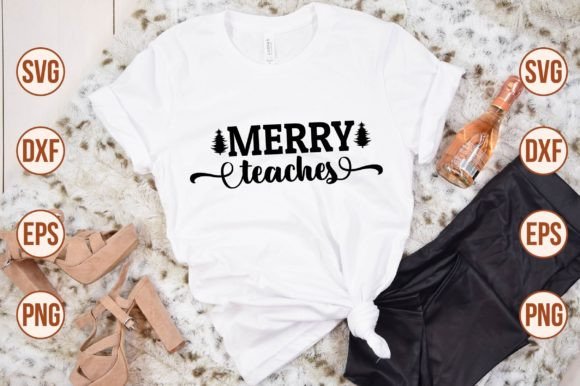
Upon opening the Merry Teacher Svg in my design software, the first thing I noticed was the balance between festive cheer and professional clarity. In the Crafts and Graphics category, holiday-themed teacher assets often suffer from being overly intricate or cartoonish, which can muddy the waters when converting to an embroidery file. This design, however, maintains a crisp silhouette that suggests it was created with scalability in mind. The mood is warm and appreciative without being chaotic, making it an excellent candidate for a handmade product intended to show genuine gratitude rather than generic seasonal decoration.
The vector paths appear smooth, which is a critical indicator for digitizers. Jagged nodes in a source file often result in jagged stitches or unnecessary trims during production. Here, the curves are fluid, suggesting that if you are using this as a base for an applique design or converting it for direct stitching, the software will interpret the shapes correctly. For an Etsy seller or small shop product creator, this visual cleanliness translates directly to perceived value. A design that looks intentional and polished on screen is far more likely to produce a high-quality embroidered patch or sweatshirt embroidery piece that customers trust.
Real-World Application: The Custom Tote Bag Test
To truly evaluate this asset, I mentally placed it in a specific production scenario: a natural canvas tote bag intended as a holiday gift for a favorite instructor. Tote bags are a staple for any craft business because they offer a flat, stable surface for embroidery, but the fabric texture can sometimes obscure fine details. In this context, the Merry Teacher Svg performs exceptionally well because its composition allows for flexible sizing.
When planning this embroidery project, I considered how the design would interact with the canvas weave. Because the SVG provides editable vectors, I could easily adjust the stroke width or simplify internal elements before digitizing to ensure the stitch density remained appropriate for the fabric. If the design were too dense, it would create a bulletproof patch effect that distorts the bag; if too sparse, the canvas would show through unattractively. The versatility of this graphic allows for a balanced fill stitch area that covers the fabric adequately while maintaining the drape of the bag. For creative entrepreneurs selling personalized gifts, this adaptability is essential. It means you can use the same source asset for a lightweight tea towel and a heavier denim apron simply by adjusting your digitizing parameters based on the vector foundation.
Navigating Fabric Limitations and Hoop Sizes
While the Merry Teacher Svg is versatile, practical experience dictates caution in certain applications. As a digital embroidery file source, it requires thoughtful interpretation depending on the substrate. I would advise against using highly detailed versions of this design on stretchy knits like ribbed baby clothes or thin performance wear unless significant stabilization is used. The nature of holiday graphics often involves multiple color changes and layered elements; on unstable fabrics, this can lead to registration issues where outlines do not meet fill areas perfectly.
Furthermore, consider your hoop size constraints. While vectors are infinitely scalable, embroidery has physical limits. If you attempt to shrink this design down for a tiny collar accent or a cap logo, you must verify that the resulting stitch length remains above the minimum threshold for your machine. Tiny lettering or narrow satin columns derived from this SVG may need to be simplified or converted to running stitches to prevent thread breaks and needle damage. Conversely, when scaling up for a large pillow cover or blanket, ensure the stitch count does not become excessive. Always check the final digitized specs before committing to a commercial embroidery run. Testing on scrap fabric is non-negotiable here; what looks perfect in a printable mockup may require tension adjustments or stabilizer changes when hitting actual textile.
Professional Presentation and Commercial Viability
For those running a craft business or managing Etsy listings, the presentation of your finished product is as important as the stitching itself. The 300 DPI transparent background specification of the Merry Teacher Svg makes it invaluable for creating professional marketing materials. Before I even thread a needle, I use high-resolution vector assets to generate accurate digital previews for clients. Being able to overlay this design onto photos of sweatshirts, mugs, or ornaments helps secure sales by setting clear expectations.
However, a crucial note for digital product sellers and apparel decorators: always verify licensing. Just because a file is editable or compatible with Adobe Photoshop does not automatically grant commercial rights for selling finished goods or redistributing the digital embroidery file. Confirm whether this specific asset permits use in products sold for profit or if it is restricted to personal use. Respecting intellectual property protects your business reputation and ensures you are building a sustainable brand. When used correctly and legally, this design supports brand consistency across various merchandise, reinforcing recognition among your customer base.
Essential Designer Notes for Success
Before adding the Merry Teacher Svg to your next production queue, keep these practical checkpoints in mind to ensure professional results:
- Test Stitch First: Never assume a vector converts perfectly. Run a test on the exact fabric and stabilizer combination you plan to use for the final handmade product.
- Evaluate Contrast: Check thread colors against both light and dark fabric backgrounds. A design that pops on white cotton might disappear on navy fleece without an outline or contrasting underlay.
- Inspect Small Details: Zoom in to 400% in your embroidery software to identify potential jump stitches or overlapping areas that could cause bulk.
- Mockup Realism: Use the transparent PNG or EPS to create realistic printable mockups, but annotate them clearly so customers understand the texture difference between digital art and actual stitching.
- Stabilizer Selection: Match your backing to the fabric weight. A tear-away might suffice for the tote bag test, but a cut-away is likely necessary for sweatshirt embroidery to prevent puckering over time.
- Washability Check: If creating items like kitchen towels or baby bibs that face frequent laundering, ensure the digitized version of this design uses durable stitch types that won't unravel.
Ultimately, the Merry Teacher Svg serves as a robust foundation for holiday-themed embroidery projects. Its strength lies in its clean geometry and format flexibility, allowing experienced makers to tailor the output to their specific needs. Whether you are crafting a one-off personalized gift or stocking your shop with seasonal custom apparel, approaching this asset with technical mindfulness will bridge the gap between digital potential and tangible quality. Remember that in our industry, the best designs are those that respect both the art and the engineering of the stitch.