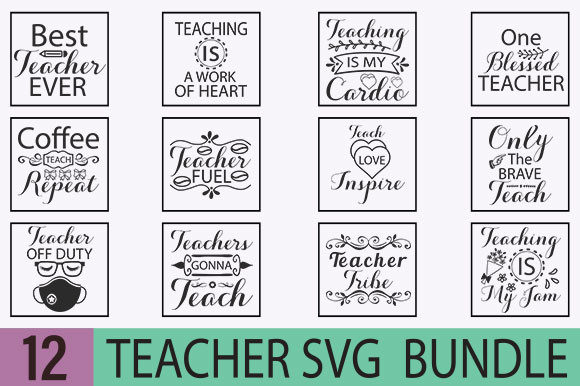
One Loved Teacher SVG: An Embroidery Design Review
As a professional embroidery designer and product reviewer, I approach every new digital asset with a critical eye. When evaluating One Loved Teacher, Teacher SVG Quotes, my primary concern is not just how the graphic looks on a screen, but how it translates into thread on fabric. This design falls under the Graphics category for Crafts, marketed as a versatile file for t-shirts, posters, and mugs. However, for those of us in the machine embroidery business, an SVG or EPS file is merely a starting point. My review focuses on the practical application of this design for real-world projects, specifically analyzing its viability for custom apparel and personalized gifts.
First Impressions and Visual Personality
Upon opening the source files, which include both EPS and SVG formats at 300dpi, the design presents a clean, sentiment-driven aesthetic. The phrase "One Loved Teacher" carries an immediate emotional weight that resonates with parents, students, and school staff. Visually, the layout appears balanced, suggesting it was created with print in mind. For embroidery, this balance is crucial. A design that is too top-heavy or cluttered will cause puckering or registration issues when stitched.
The mood of this design is warm and appreciative, making it an excellent candidate for end-of-year gifts or teacher appreciation week merchandise. As a digital embroidery file, the vector nature of the SVG allows for significant manipulation. Before digitizing, I assess the line weight and negative space. If the lettering is too thin, it cannot support a satin stitch; if it is too thick without internal detail, it becomes a dense block of thread that feels stiff against the skin. This specific design seems to offer enough flexibility to be adapted into either a fill stitch for durability or a satin stitch for a premium look, depending on the intended fabric texture.
Real-World Application: The Custom Sweatshirt Test
To truly evaluate One Loved Teacher, Teacher SVG Quotes, I mentally simulate a specific production scenario: creating a custom embroidered sweatshirt for a boutique Etsy listing. Sweatshirts are a staple for craft businesses, but fleece and French terry fabrics present unique challenges due to their pile and stretch.
In this scenario, I would use the SVG file to create a customized applique design rather than stitching out solid text. Using the vector lines as a guide for cutting fabric pieces reduces stitch density significantly, keeping the garment soft and wearable. The "100 Color Changeable" feature mentioned in the product description is particularly valuable here. It allows me to match the thread colors exactly to a school’s branding or a customer’s specific request without having to redraw elements in digitizing software. This adaptability directly impacts product value and customer trust, as buyers expect precise color matching in personalized gifts.
For a tote bag design, the approach shifts. Canvas is stable and forgiving, allowing for higher stitch counts. Here, I might utilize the design as a standalone embroidered patch or a direct-to-garment stitch-out. The high resolution (300dpi) ensures that when I import the artwork into my digitizing program, the nodes are smooth, resulting in cleaner stitch paths and fewer jagged edges on the finished product.
Navigating Fabric Limitations and Hoop Sizes
While One Loved Teacher, Teacher SVG Quotes is versatile, experienced makers know that no design works everywhere. There are specific contexts where caution is required. If you are planning baby embroidery on delicate onesies, the design scale must be reduced carefully. Small lettering often loses clarity when shrunk below a certain threshold. In such cases, I recommend simplifying the quote or switching to a running stitch outline to maintain legibility without compromising the fabric's integrity.
Textured fabrics like terry cloth towels or pique polo shirts also demand attention. Fine details in the SVG may get lost in the fabric nap. For these items, using a water-soluble topping stabilizer is non-negotiable to keep the stitches visible and crisp. Additionally, curved surfaces like caps require a completely different digitizing strategy. A flat SVG designed for a poster cannot simply be hooped onto a cap; the distortion will ruin the alignment. Always verify your hoop size and adjust the design dimensions before committing to a run.
Dark fabrics present another consideration. If the design relies on fine lines, they may disappear against navy or black material unless you use a contrasting underlay or increase the stitch width. Always test thread colors against the actual garment fabric, not just a digital mockup, to ensure sufficient contrast for readability.
Commercial Viability for Makers and Sellers
For Etsy sellers and small shop owners, time is money. The fact that this product includes source files (EPS and SVG) rather than just pre-digitized formats is a massive advantage. It grants creative entrepreneurs the freedom to generate their own machine embroidery design tailored to specific client needs rather than being locked into a single size or stitch type. This flexibility supports brand consistency across different products, from holiday embroidery on ornaments to commercial embroidery on staff uniforms.
However, a critical note for digital product sellers and apparel decorators: always confirm licensing terms before selling finished items or using the design in printable mockups. While the file is ready to print and modify, ensuring you have the commercial rights to sell physical goods derived from this graphics asset protects your business. Professionalism extends beyond stitch quality to legal compliance.
Essential Designer Notes for Success
Before loading One Loved Teacher, Teacher SVG Quotes into your machine, adhere to these practical guidelines to ensure a professional outcome:
- Test on Scrap Fabric First: Never stitch a new design directly onto a final product. Use a scrap of the exact same material and stabilizer combination to check for registration issues, tension problems, or design flaws.
- Verify Stitch Density: Since this is a graphics file converted for embroidery, you must manually set appropriate densities. Overly dense areas can cause needle breaks or fabric distortion, while sparse areas may look cheap.
- Check Thread Color Contrast: View your design in black and white during the digitizing phase. If the design lacks definition without color, it will fail on tone-on-tone fabrics.
- Stabilizer Selection: Match your stabilizer to the fabric weight. Cut-away for stretchy knits, tear-away for stable wovens, and wash-away for freestanding lace or high-pile fabrics.
- Mockup Validation: Create both light and dark background mockups to visualize how the design performs in different contexts. This helps in creating accurate listings for handmade products.
- Inspect Small Details: Zoom in to 400% in your software. Any gaps or overlapping vectors in the SVG will become glaring errors in thread. Fix them digitally before stitching.
Elevating the Finished Product
Ultimately, One Loved Teacher, Teacher SVG Quotes offers a strong foundation for meaningful embroidery projects. Its success depends entirely on the maker's willingness to treat the SVG as a blueprint rather than a final instruction. By respecting fabric physics, adjusting stitch parameters, and testing rigorously, this design can transform from a simple digital graphic into a cherished personalized gift or a best-selling boutique item. Whether you are crafting a single holiday gift or fulfilling a bulk order for a school district, the attention to detail you apply during the digitizing and stitching process is what separates amateur attempts from professional, commercial-grade embroidery.