I Just Hit 100 Days of School SVG Review
As a professional embroidery digitizer and product reviewer, I approach every new graphic asset with a specific question: will this actually stitch out cleanly on fabric? When evaluating the I Just Hit 100 Days of School Svg File, my focus shifts immediately from screen aesthetics to production viability. This milestone design is a staple in the education and parenting niche, but translating a vector graphic into a tangible machine embroidery design requires careful consideration of line weight, negative space, and overall balance. Having reviewed countless files in the Crafts and Graphics categories, I can see that this particular asset offers strong potential for both personal projects and commercial inventory, provided it is handled with technical precision.
First Impressions and Visual Hierarchy
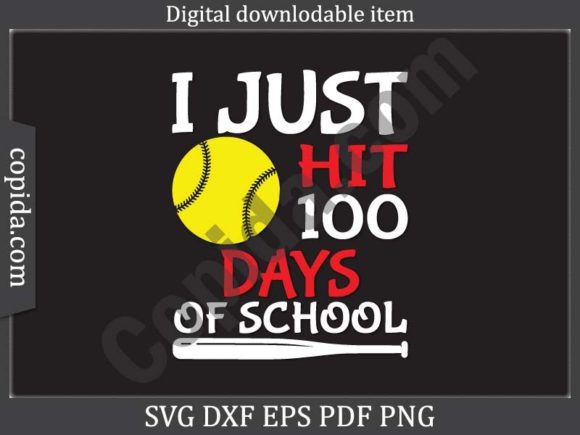
Upon extracting the .zip folder and opening the SVG and EPS formats, the first thing I assess is the visual mood. The "100 Days" theme inherently carries a celebratory, energetic tone. In this file, the layout feels balanced rather than cluttered, which is critical when converting to an embroidery file. A design that looks busy on a monitor often becomes a thread-eating nightmare on a hoop. Fortunately, this graphic maintains clear separation between elements. The typography appears bold enough to support a satin stitch column without collapsing, while the accompanying icons or numerals have sufficient interior space for fill stitch or appliqué work.
For a designer, this clarity is reassuring. It suggests that the original creator understood the difference between print graphics and stitch-ready art. The visual personality strikes the right note for elementary school celebrations—playful yet legible from a distance. This readability is paramount because, unlike a printed shirt, an embroidered piece relies on texture and shadow to define shapes. If the details are too fine, they get lost in the fabric weave; if they are too thick, the garment becomes stiff. This design seems to hit that sweet spot, making it a reliable candidate for my digital product library.
Real-World Application: The Custom Sweatshirt Test
To truly judge this asset, I mentally place it in a real-life production scenario. Let’s imagine I am fulfilling a custom order for a teacher’s lounge celebration or a parent wanting a commemorative sweatshirt embroidery piece for their child. Sweatshirts and fleece are notoriously tricky due to their loft and stretch. Using the I Just Hit 100 Days of School Svg File for this application requires strategic planning.
In this scenario, I would likely treat the main numeral "100" as an applique design element. Appliqué reduces stitch density significantly compared to full fill areas, keeping the sweatshirt soft and wearable. The accompanying text would work beautifully in a medium-weight satin or bean stitch. I envision this centered on the chest, roughly 4x4 inches. At this size, the design commands attention without overwhelming the garment. For an Etsy seller or small shop owner, this specific application has high perceived value. Parents love documenting milestones, and a well-executed embroidered sweatshirt feels far more premium than a vinyl heat transfer. The design’s structure supports this premium feel because it allows for color blocking—perhaps matching the school colors—which increases buyer engagement and customization options.
Navigating Fabric Limitations and Hoop Constraints
While the design is versatile, experienced makers know that not all substrates are created equal. When using this file for baby embroidery or lightweight knits, caution is necessary. Baby onesies and thin cotton tees cannot support heavy saturation. If you attempt to stitch the entire design at maximum density on a 6-month-old bodysuit, you risk puckering or even tearing the fabric. In these cases, I recommend resizing the design down or simplifying the internal fills to running stitches or light tatami patterns.
Similarly, consider your hoop size limitations. While the SVG format is infinitely scalable, your machine’s physical constraints are not. Before committing to a large tote bag or blanket project, verify that the resized proportions still maintain legibility. Tiny lettering that looks crisp in Adobe Illustrator may turn into illegible bumps when stitched at 2mm height. Always check the minimum recommended text size for your specific thread weight. Furthermore, textured fabrics like terry cloth or canvas require a different approach. The I Just Hit 100 Days of School Svg File may need a slight increase in underlay or pull compensation to prevent the stitches from sinking into the pile. Ignoring fabric texture is the fastest way to ruin a perfectly good digital asset.
Professional Standards and Commercial Viability
For those running a craft business or selling finished goods, professionalism hinges on consistency. This design asset serves as a solid foundation for brand cohesion across multiple products. Imagine creating a coordinated collection: a tote bag design for books, a cap for field day, and a patch for a backpack. Because the vector lines are clean, the design scales effectively across these diverse items without losing its identity. This versatility is essential for maximizing ROI on digital assets.
However, commercial use demands rigorous testing. Never sell a handmade product featuring this design without first stitching a sample. Check how the thread colors interact. Does the outline register correctly against the fill? Is there adequate spacing between letters to prevent thread breaks? These microscopic details determine whether a customer trusts your quality. Additionally, if you plan to create printable mockups for your online listings, the included PNG and PDF formats are invaluable. They allow you to present a realistic preview to buyers before you ever thread a needle. Just remember to clarify licensing terms regarding digital resale versus finished physical products to protect your business integrity.
Essential Designer Notes for Success
Before you load this file into your software or machine, adhere to these practical protocols to ensure a flawless result:
- Always Test Stitch: Never assume a digital file is perfect. Run a test on scrap fabric that matches your final project’s weight and weave. This reveals tension issues or registration errors that screens cannot show.
- Verify Stabilizer Choice: Match your stabilizer to the fabric, not just the design. Stretchy knits need cut-away backing; woven cottons often suffice with tear-away. Proper stabilization prevents the "I Just Hit 100 Days" text from distorting after washing.
- Check Contrast Ratios: Embroidery relies on light reflection. White thread on pale yellow fabric might disappear. Use high-contrast thread combinations or add a subtle border to ensure visibility in photos and real life.
- Inspect Small Details: Zoom in to 100% in your embroidery software. Ensure no stitch columns are thinner than 0.8mm unless intended as running stitch accents. Thin satins are prone to breaking and fraying.
- Confirm File Integrity: Since the download arrives as a compressed .zip, ensure you extract all files completely before opening. Corrupt transfers can cause missing nodes or jagged lines in the DXF or EPS versions.
- Review Licensing: Double-check the specific usage rights included with your purchase. Confirm whether you can use the file for mass-produced commercial embroidery or if it is limited to small-batch handmade sales.
The I Just Hit 100 Days of School Svg File represents more than just a seasonal graphic; it is a functional tool for creators who understand the intersection of digital art and textile craftsmanship. By respecting the technical requirements of embroidery and applying thoughtful design judgment, this asset can elevate your product line, satisfy client expectations, and celebrate student achievements with lasting quality. Whether you are crafting a personalized gift or stocking your boutique, success lies in the details of execution.